- Empty cart.
- Continue Shopping

How Dogs’ Smell Abilities Enhance Human Safety and Security – dog olfaction
- Posted on
Naresh Gupta
- 0
- Categories: Latest Cats & Dogs World News: Updates, Stories, and Tips for Pet Lovers
dog olfaction
How Dogs’ Incredible Sense of Smell Enhances Human Safety
Ever wondered how your furry friend seems to know what’s cooking without stepping into the kitchen? It’s all thanks to their extraordinary dog olfaction. Dogs aren’t just our companions in life; they’re also invaluable allies in keeping us safe. Let’s dive into how their noses do astonishing things.
The Power of Dog Olfaction: More Than Just a Super Sniffer
When we talk about dog olfaction, we’re referring to their amazing ability to detect scents. Dogs have up to 300 million smell receptors in their noses, compared to our mere 5 million. Imagine having a nose that’s thousands of times more sensitive than your own! This is why dogs are often described as having a superpower rather than mere smelling abilities.
But why does this matter so much beyond the kitchen counter? Well, as it turns out, this gift is invaluable in many safety and security operations worldwide. Dogs use this unparalleled ability to contribute to important work in ways that might surprise you.
How Dogs’ Noses Keep Us Safe
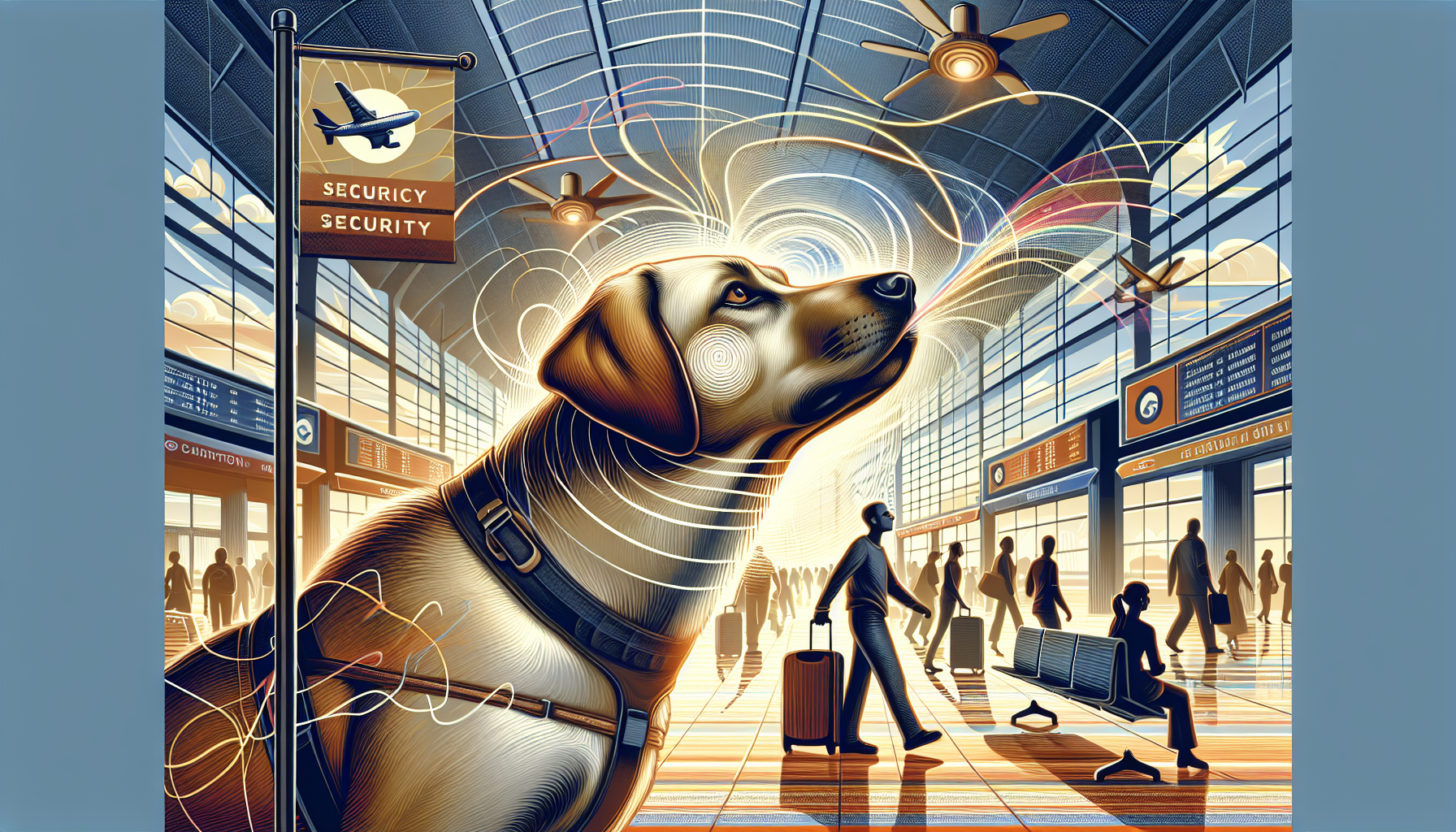
Dogs’ noses are utilized in various fields for safety purposes. You may have seen dogs at airports and other travel hubs sniffing around luggage. Here’s where dog olfaction really shines, helping to detect substances that aren’t supposed to be there.
So, how exactly do they do it? Dogs are trained to recognize specific scents associated with various substances, from explosives to narcotics. When a trained dog encounters a trace of these substances, they alert their handlers, potentially preventing disasters.
But it’s not just about big operations and international safety. Imagine walking in a park with your dog, and they suddenly become curious about a particular parcel on the ground. While your instinct might be to walk on by, a dog’s nose could identify something suspicious that could be a risk. Their simple sniffing habit transforms into a life-saving detection system.
Going Beyond: Dogs in Medical Detection
Have you ever heard of dogs sniffing out health issues? It’s one of the exciting expansions of dog olfaction. Recent studies have shown that some dogs can be trained to detect certain types of diseases, such as cancer, by picking up specific biochemical markers in a person’s scent.
Think of dogs as our natural diagnostic tools. Isn’t it fascinating how their noses can determine something that complex medical tests can confirm later? It’s like having a furry little doctor giving you a preliminary check-up!
A Day in the Life: Meet Max, the Super Sniffer
Let’s talk about Max, a Labrador Retriever who works at a busy train station. Every day, Max comes in with his handler, eager to begin his sniffer duties. His morning begins with a stroll through the station, weaving between travelers and suitcases. His nose stays alert, picking up a multitude of scents, each providing him with a different puzzle to solve.
One day, Max paused suddenly by a large suitcase. His handler noticed Max’s signal—his well-trained cue system that indicates something unusual. On closer inspection by the human security team, it turned out there was a prohibited item inside. Thanks to Max, a potential threat was neutralized, all from the simple action of sniffing!
Why Are Dogs So Good at This?
If dogs could explain why they love sniffing so much, they’d probably start with their unique anatomy. Inside a dog’s nose, there’s a specialized organ called the vomeronasal organ, which helps them sniff out pheromones and other chemicals. This addition to their sniffing arsenal makes them particularly adept at detecting subtle changes in their environment.
Moreover, dogs have a special ability to separate smells, like a music producer isolating each track from a melody. While humans might catch a whiff of ‘cake’, dogs smell each individual ingredient, from the sugar to the vanilla, making them highly efficient in recognizing scents.
Training: The Key to Successful Scent Work
Training is what turns an average pooch into a scent-detection pro. This process involves teaching dogs the specific scents they need to detect, often using a system of rewards for correctly identifying target odors. It’s not just about the innate ability of dog olfaction; it’s also about the bond and communication between the dog and handler.
- Positive reinforcement is used to encourage their natural sniffing behavior.
- Handlers rely on their dogs’ body language and cues.
- Regular exercises keep the dogs’ skills sharp and accurate.
Isn’t it incredible how the simple act of sniffing can evolve into a skill that saves lives?
Wrapping Up: Our Four-Legged Detectives
It’s amazing how dog olfaction serves us in so many vital ways. From keeping our airports secure to providing early medical warnings, the mighty canine nose continues to be an irreplaceable tool in human safety efforts. So next time you see a working dog on the streets, remember the powerful contribution they’re making with each sniff.
Do you have a story about a time your dog’s nose led to an interesting discovery? Feel free to share it with us in the comments below!
Unbeatable Pet Accessory Deals Await You on Amazon!
Watch funny and cute dog videos!
Disclaimer: This article was generated with the assistance of AI technology. All images featured on this website are either sourced from free-to-use platforms, created by us, generated with the assistance of AI technology or used with permission. If you believe an image on this site violates copyright or your rights, please contact us, and we will address the issue promptly.